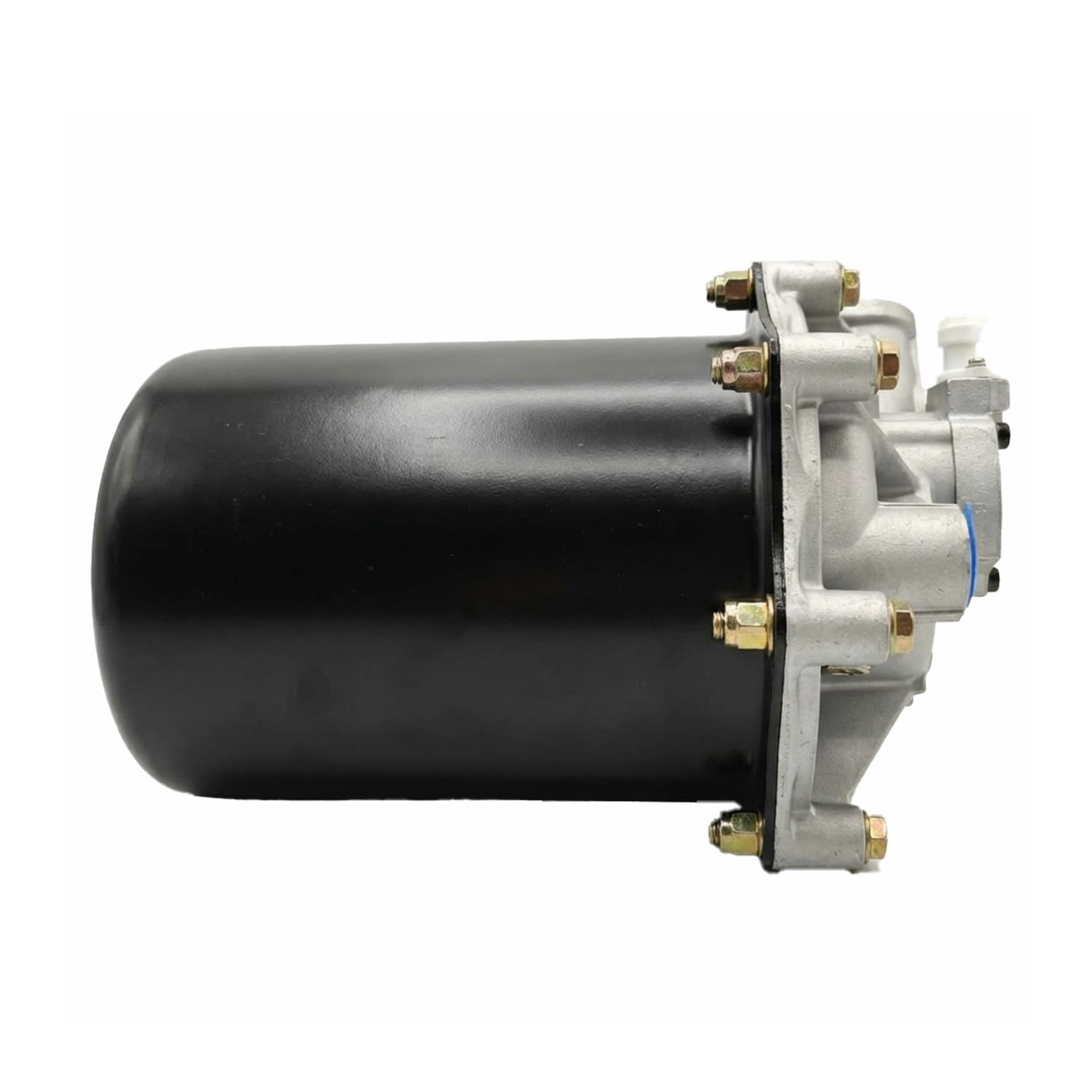
Drain your tanks and get a cup of water out? That’s the air dryer telling you it’s done. It sits between the compressor and the wet tank and pulls moisture and oil out of the air before they reach your valves — and when it quits, the symptoms turn up all over the truck.
What a dying dryer looks like
The tell-tale sign is water where there shouldn’t be any — draining out of the tanks, or worse, frozen lines on a cold morning. You might also notice the dryer purging constantly (or never), a hiss around the purge valve, oil in the discharge line, or the compressor cycling more than it used to. None of these fix themselves.
Why you don’t let it ride
Moisture in the air system rusts valves from the inside, washes the lube out of moving parts, and in winter it can freeze a line solid — and a frozen line means no service brakes. A bad dryer also drags every downstream valve toward an early grave, so replacing it on time is cheap insurance.
Rebuild or replace
Plenty of the time you don’t need a whole new unit. Most dryers take a desiccant cartridge, and the common service items — cartridge, purge valve, heater, check valve — bolt on without replacing the housing. If the housing’s cracked or the heater circuit is dead, then it’s time for a new dryer. (More on that call in the rebuild-vs-replace writeup.)
GBK air dryers and cartridges cross-reference the big names — match your number on the Bendix or Haldex page, or browse air dryers and repair kits. While you’re at it, get in the habit of draining the tanks daily — it buys the dryer time between services.
Discover more from GBK USA
Subscribe to get the latest posts sent to your email.